Eid Milad-un-Nabi — also called Mawlid al-Nabi — marks the birth of the Prophet Muhammad, and in 2026 it falls on Tuesday, 25 August. Across Sydney's South Asian and Middle Eastern Muslim communities, the day often ends the same way many milestone gatherings do. A cake gets cut and shared among family, neighbours, and guests from the local mosque or community hall.
That's the celebration Num Num's Bakery was built to cater for. Every cake we make — all 15 flavours, across both our Harris Park and Riverstone locations — is 100% eggless as standard, not a special request. This guide covers who observes Eid Milad-un-Nabi across Sydney, what the day involves, and how to order your cake with confidence.
It doesn't stop there. Sydney marks a great deal more than one festival, so the second half of this page is a working calendar of 29 other celebrations — Onam, Vesak Day, Durga Puja, Teej, Maha Shivratri, Pongal, Nowruz, Rosh Hashanah, Chuseok and the rest. Each entry gives the season it falls in, who marks it here, and what that actually means for a cake order. If that's what brought you to this page, jump straight to the Sydney festival cake calendar.
- Islam is the faith of 6.3% of Greater Sydney — around 330,000-340,000 people (ABS, 2021).
- Eid Milad-un-Nabi 2026 falls on Tuesday, 25 August — separate from Eid al-Fitr and Eid al-Adha.
- Every Num Num's cake — all 15 flavours — is 100% eggless.
- Observance varies by tradition — not every Muslim community marks the day.
- This guide also covers 29 other Sydney festivals, from Onam and Vesak Day to Nowruz and Chuseok.
- Many Hindu, Sikh, Jain and Buddhist observances call for vegetarian food on the day — eggless is the default there, not a substitution.
- Order via WhatsApp with 48 hours notice — 4-5 days in peak season.
How Many Sydney Families Observe Eid Milad-un-Nabi?
Islam is the faith of 6.3% of Greater Sydney's population — roughly 330,000 to 340,000 people — well above the 3.2% national figure, according to the Australian Bureau of Statistics, 2021 Census. That concentration is heavily weighted toward south-western and western Sydney, where mosques, halal bakeries, and community centres already anchor daily life for hundreds of thousands of residents.
Within Greater Sydney, Muslim residents make up the largest single share of the population in suburbs including Lakemba, Auburn, Greenacre, Wiley Park, and Mount Lewis. Some of these areas record between 40% and 68% of residents identifying as Muslim. Auburn in particular sits directly within Num Num's Bakery's Harris Park catchment.
Islam is the faith of 6.3% of Greater Sydney's population — roughly double the 3.2% national figure — with the highest suburb-level concentrations found in Lakemba, Auburn, and Greenacre (Australian Bureau of Statistics, 2021 Census). For a Sydney-wide bakery, that scale makes Islamic observances a recurring order category throughout the year, not a rare or niche request.
What Is Eid Milad-un-Nabi and How Is It Different from the Two Eids?
Eid Milad-un-Nabi, also written Mawlid al-Nabi or simply Milad, commemorates the birth of the Prophet Muhammad on 12 Rabi' al-Awwal, the third month of the Islamic lunar calendar. Because the Islamic calendar is lunar, the Gregorian date shifts each year — in 2026, it falls on Tuesday, 25 August.
It is entirely separate from Eid al-Fitr, which marks the end of Ramadan, and Eid al-Adha, which falls during the Hajj pilgrimage season. Observance of Mawlid also varies significantly between different schools of Islamic thought. Many Sunni communities, particularly those with South Asian, Middle Eastern, and North African heritage, mark it with gatherings, recitations, and shared meals. Other traditions, including some Salafi and Wahhabi interpretations, do not observe it at all, according to The Conversation's analysis of global Mawlid practice.
From our order data across Harris Park and Riverstone, Milad orders tend to arrive in a tight cluster around the lunar date itself, rather than spread across a season the way Christmas or birthday orders are. Families often mention they're feeding an entire mosque committee or extended household in one sitting, which shapes both the size and the flavour choice.
Why Do Sydney Families Order a Cake for a Milad Gathering?
In many South Asian and Middle Eastern Muslim households, a Milad gathering closes with a cake cut and shared among guests, alongside sweets and a communal meal. A special cake is often baked specifically to mark the occasion, according to community accounts of Mawlid observance collected by Yalla World. It's a custom rather than a religious requirement, and it varies from family to family and community to community.
For Sydney households hosting a Milad at home, the gathering usually brings together neighbours, extended family, and members of the local mosque community. It's often a genuinely mixed guest list where dietary needs vary widely from table to table.
How Do Sydney's Muslim Communities Mark the Day Differently?
Sydney's Pakistani, Bangladeshi, and North Indian communities often mark Mawlid with a Jashn-e-Eid Milad-un-Nabi gathering. It's typically a home or hall event built around naat recitation (devotional poetry praising the Prophet), a shared meal, and the closing cake. Turkish and Southeast Asian communities tend to favour a quieter mosque-centred observance, with fewer large home receptions.
Lebanese, Egyptian, and other Middle Eastern Sunni communities in Sydney observe the day with varying degrees of formality, ranging from a family dinner to a larger community mawlid at the local mosque. Australia's Muslim population draws from more than 60 countries of birth, according to the Australian Bureau of Statistics. No single format describes how the day is marked across the city, and that's part of what makes catering for it interesting.
What stays consistent across these different styles is the closing cake. Whether the gathering is a formal mosque function or a small family dinner, a shared dessert at the end signals the celebration has reached its natural close. That's exactly the moment our customers usually message us to place their order — often planning a full year ahead once a family decides a cake belongs in the tradition.
Why Choose an Eggless Cake for a Mawlid Celebration?
In 2025, 8.2 million Australians — roughly 30% of the population — lived with allergic disease, nearly double the 4.1 million recorded in 2007, according to the National Allergy Centre of Excellence's "Costly Reactions" report. A Milad guest list that spans a mosque committee, extended family, and neighbours will almost always include someone managing a dietary restriction.
Halal-certified eggs are permitted in Islamic dietary law, so egg-free isn't a religious requirement for Mawlid the way it is for some Hindu or Jain observances. What we hear most often instead is a practical concern: hosts don't want to run a second "special" cake for allergic guests when one all-eggless cake can serve everyone at the table.
Our kitchen never uses eggs in any product or preparation area, which removes egg cross-contamination entirely. However, our cakes do contain dairy — milk powder and butter — and may involve nuts, and standard cakes contain wheat; we aren't an allergen-free bakery. According to Food Standards Australia New Zealand, eggs are one of the eight priority food allergens requiring clear labelling in Australia. For severe or anaphylactic egg allergy, tell us your needs when ordering and follow your own ASCIA-aligned medical advice — see Allergy & Anaphylaxis Australia for guidance.
What Eggless Cake Flavours and Designs Work for a Milad Gathering?
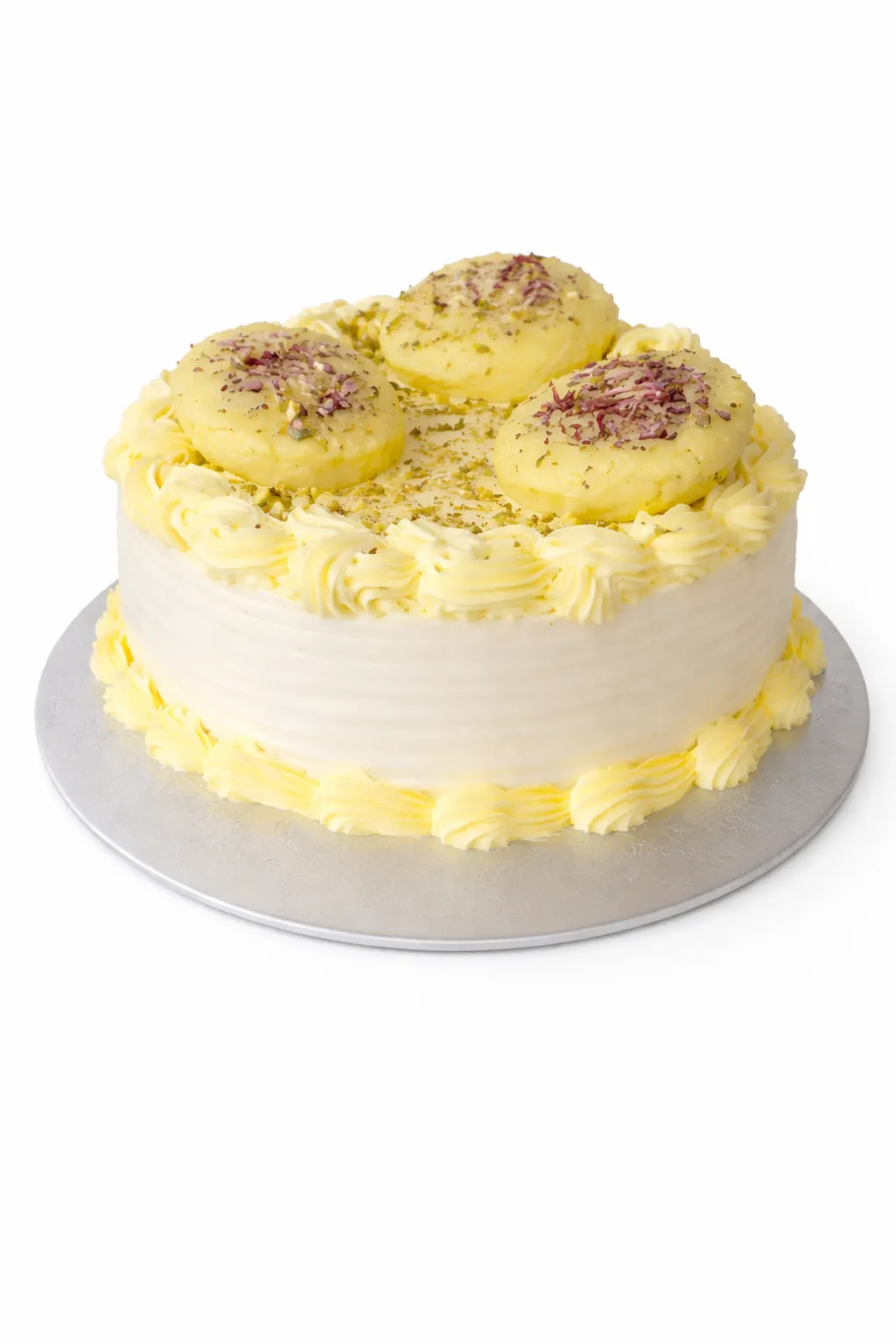
From our order data, Rasmalai and Mango are the flavours most requested for Milad gatherings among South Asian families. Middle Eastern households more often choose Vanilla or Chocolate with a simple, elegant white or gold-accented design. Green and gold colour schemes are popular across both groups, reflecting traditional Islamic decorative motifs used throughout the celebration.
All 15 Flavours — 100% Eggless.
- Chocolate — dense, rich, universally loved.
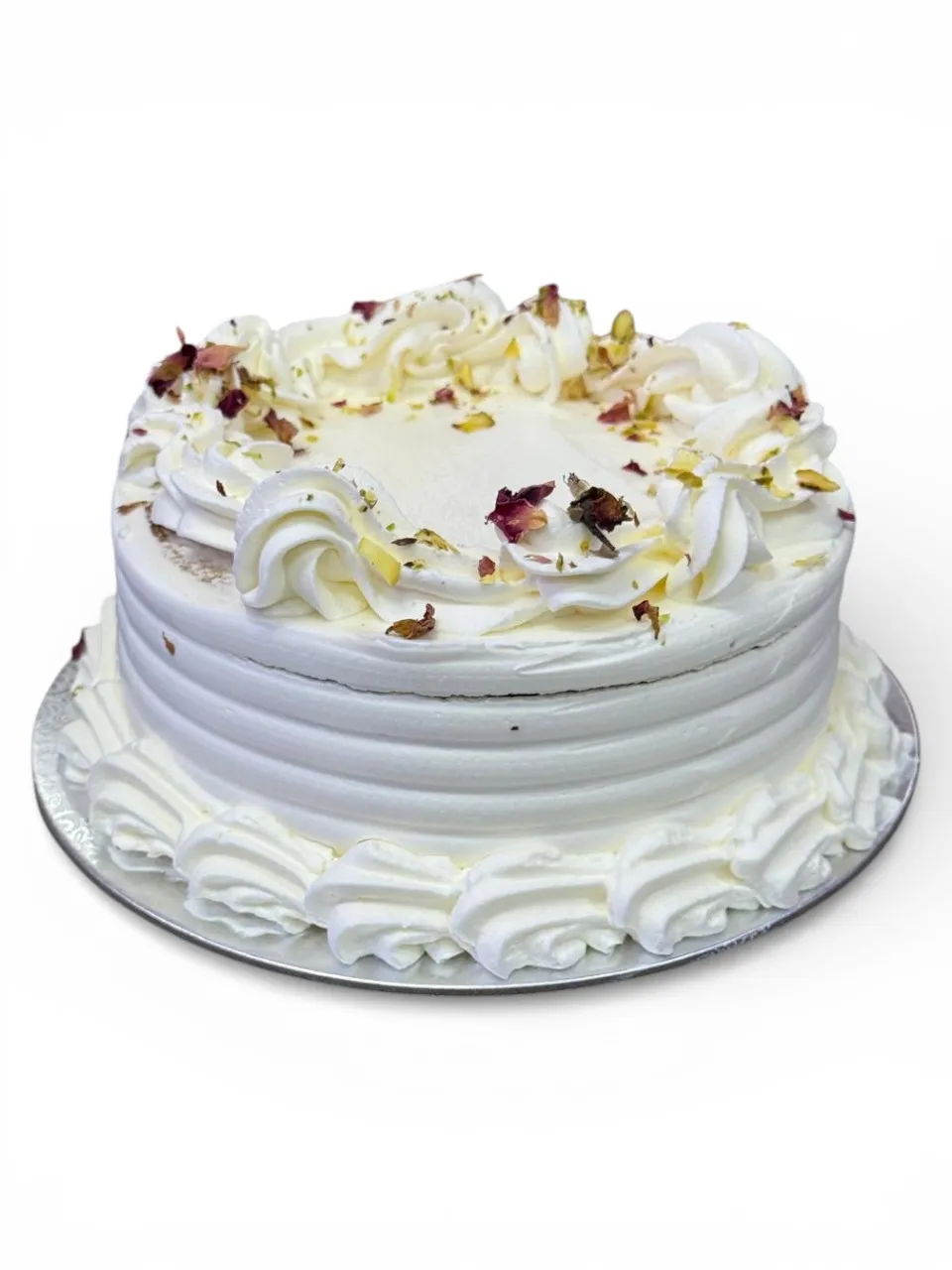
- Vanilla — classic, works for every generation at the table.
- Rasmalai — South Asian-inspired, fragrant, a firm Milad favourite.
- Butterscotch — warm, caramel-forward, a nostalgic choice.
- Red Velvet — visually striking, suited to a formal gathering.
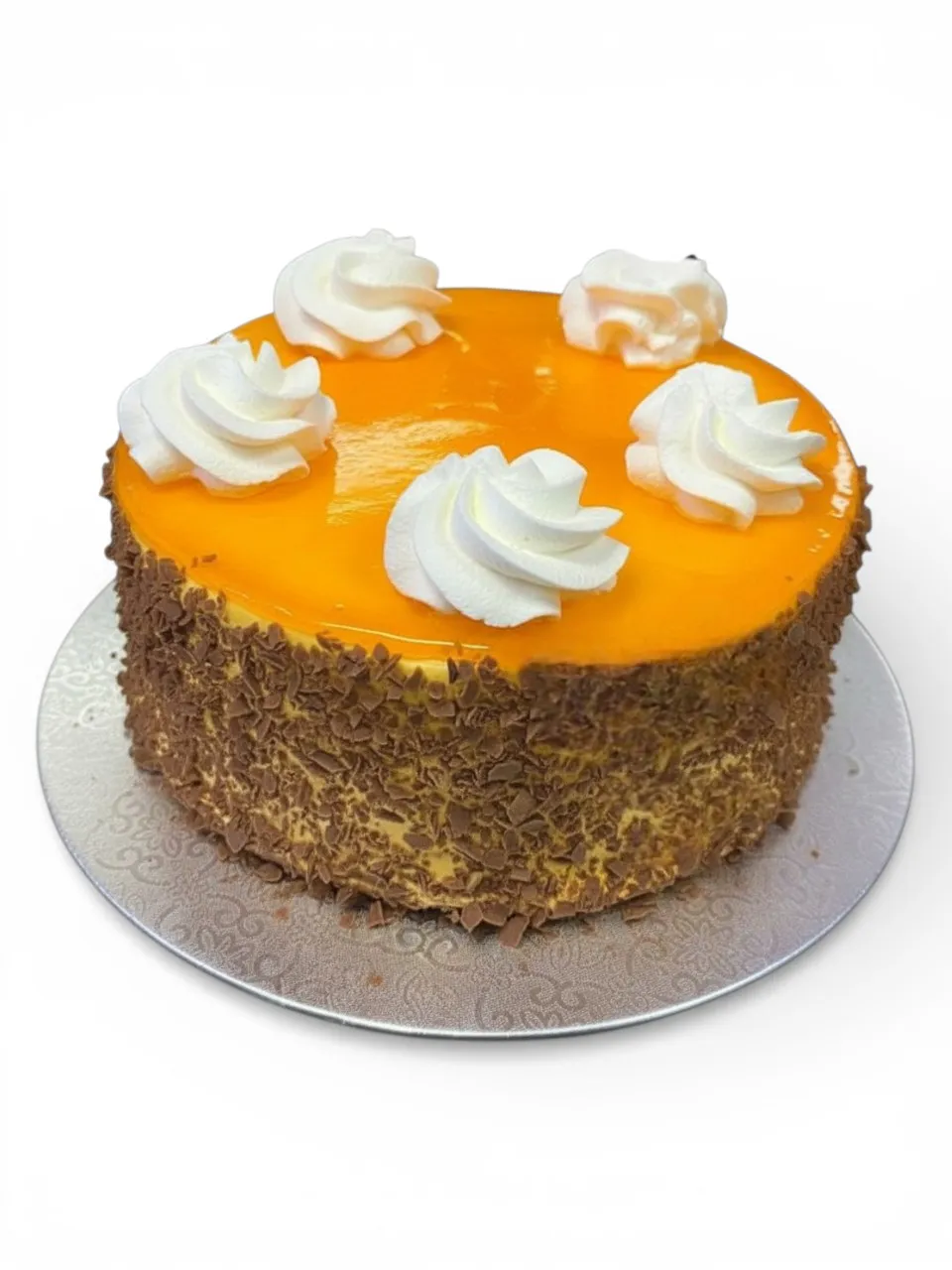
- Mango — fresh and fragrant, especially popular through the warmer months.
- Black Forest & White Forest — elegant cherry-cream combinations.
- Ferrero Rocher — premium and indulgent, a top pick for adult guests.
- Tiramisu — sophisticated and coffee-forward.
- Strawberry, Blueberry, Pineapple — bright fruit flavours for younger guests.
- Lychee — delicate and fragrant, popular among South and Southeast Asian households.
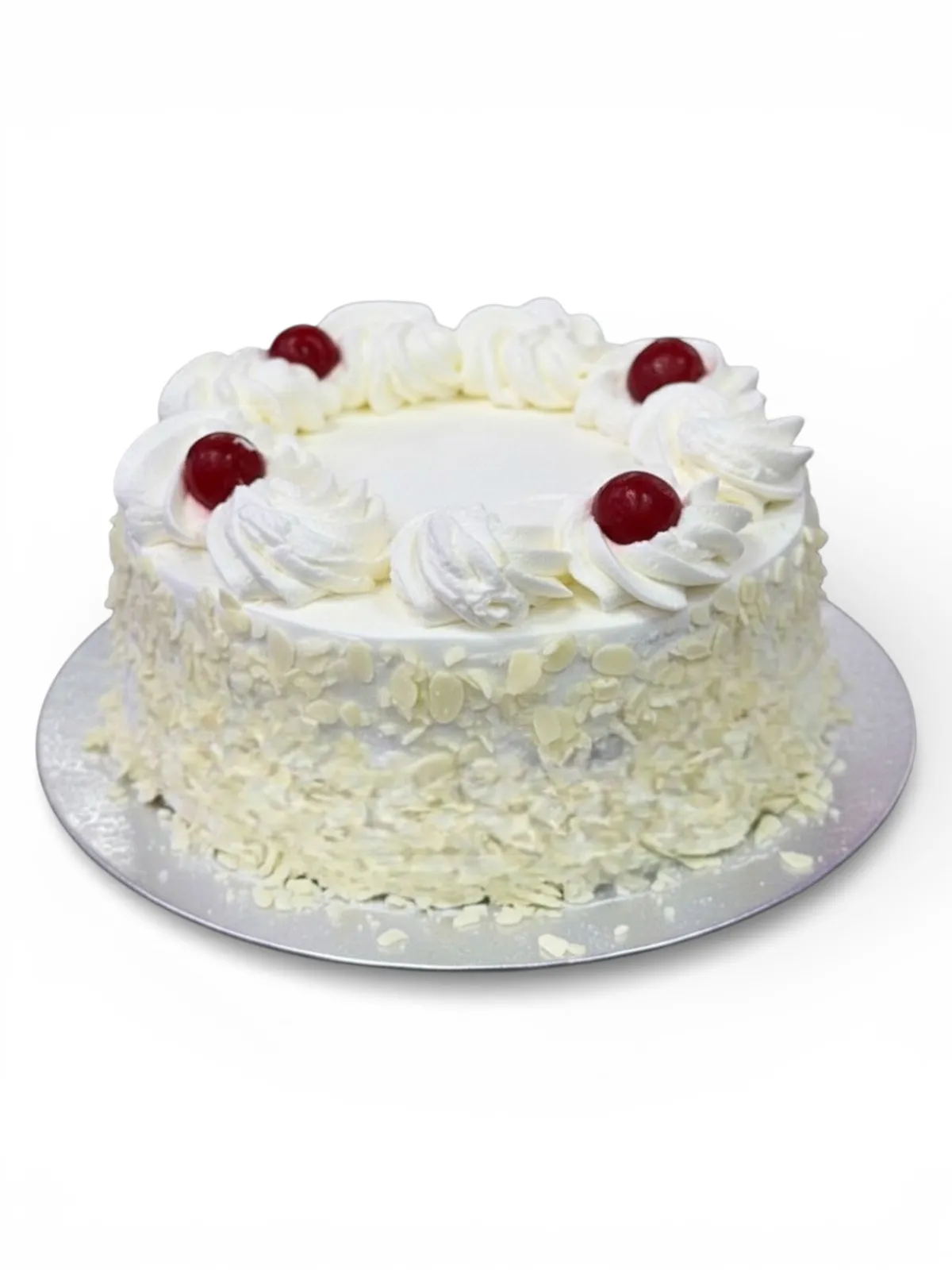
- Cookies & Cream — crowd-pleasing and party-friendly.
See the full Our Cakes page for photos of each flavour and size options. Every cake on that page is eggless — there's no separate eggless section because the whole menu qualifies. Custom colour piping in green, gold, or white can be added to any flavour at no extra design consultation.
Which Other Festivals Do Sydney Families Order Eggless Cakes For?
More than 27% of Australia's population was born overseas, and across Greater Sydney that share climbs to around 40%, according to the Australian Bureau of Statistics, 2021 Census. That's the reason a single western Sydney bakery gets asked for an Onam cake in September, a Pongal cake in January, and a Nowruz cake at the March equinox.
The 29 observances below all reach us as real orders. They're grouped by community rather than listed alphabetically, because the questions that decide a cake — what flavour, what colour, what the household will and won't eat that week — cluster by tradition, not by the alphabet.
Around 40% of Greater Sydney's residents were born overseas, well above the national figure of 27.6% (Australian Bureau of Statistics, 2021 Census). For a Sydney bakery that means a festival calendar with no quiet quarter: Lohri and Pongal in January, Nowruz and Ugadi in March, four separate new years inside one week of April, and a dense September-to-November run.
The Sydney Festival Cake Calendar, Month by Month
Most of these dates move. Lunar and lunisolar calendars drift against the Gregorian year, and several are set by astrological calculation rather than a printed date. Treat the months below as the window to plan inside, and confirm the exact day against your own community or temple calendar before you book.
- January: Orthodox Christmas (7 Jan), Lohri (13 Jan), Pongal (usually 14–17 Jan), Thaipusam (Jan–Feb)
- February – March: Basant Panchami / Saraswati Puja, Maha Shivratri, Purim, Nowruz (around 20–21 Mar)
- Late March – April: Ugadi, Assyrian New Year Kha b-Nisan (1 Apr), Passover, Vaisakhi, Vishu, Sinhala & Tamil New Year, Songkran
- May – June: Vesak Day (full moon)
- July – September: Teej, Janmashtami, Ganesh Chaturthi, Onam, Teachers' Day (5 Sep in India), Eid Milad-un-Nabi
- September – October: Durga Puja, Dashain, Mid-Autumn Festival, Chuseok, Rosh Hashanah, World Teachers' Day (last Friday in Oct)
- October – November: Bhai Dooj, Tihar, Chhath Puja, Guru Nanak Gurpurab
The busiest week in our festival year isn't Diwali and it isn't Christmas — it's the middle of April. Vaisakhi, Vishu, Puthandu, Aluth Avurudda and Songkran all land within roughly 72 hours of each other, and Kha b-Nisan sits at the start of the same month. Four communities, one oven. If your celebration falls in that window, 48 hours is technically enough notice but a week is realistic.
South Asian Hindu Festivals — Onam, Durga Puja, Teej and More
Fourteen of the observances on this page come out of India, Nepal and the wider Indian diaspora, and they share a thread that matters here: most are marked with sattvik or strictly vegetarian eating on the day, and in a large share of households that specifically rules out egg. An eggless cake isn't a substitution at these tables. It's the only cake that belongs on them.
Onam
Aug – Sep · Malayalam calendarWho marks it here: Kerala's Malayali community, whose associations run Onam Sadhya lunches in hired halls through Parramatta, Blacktown and the Hills across late August and September. The festival runs ten days and peaks on Thiruvonam, fixed by the Malayalam calendar and the Thiruvonam star, so the Gregorian date shifts every year.
What it means for your cake: the sadhya is a strictly vegetarian banquet served on a banana leaf and closed with payasam. A cake sits alongside that, not in place of it, so keep it eggless and keep it light. Mango, Lychee and Vanilla all read correctly; heavy chocolate after a sadhya does not. For design, ask for a pookalam-style circular flower arrangement in yellow, orange and white, or the cream-and-gold kasavu border from a Kerala sari. Hall events usually start at 10-inch.
Durga Puja
Sep – Oct · lunar (Ashwin)Who marks it here: Sydney's Bengali community. Several associations run full pandal pujas in hired halls over the five main days, closing with Vijaya Dashami and Sindoor Khela.
What it means for your cake: bhog is vegetarian, and plenty of families keep egg, onion and garlic out of the kitchen entirely across the puja days. The cake belongs to the Bijoya socials and family dinners that follow, where "Shubho Bijoya" lettering is the standard request. Red and white — the Bengali sari palette — with alpona-style white piping is the design people describe most often. Rasmalai is the closest flavour we bake to the sandesh and mishti doi register these gatherings expect.
Teej
Jul – Sep · lunarWho marks it here: North Indian and Nepali women's gatherings. Hariyali Teej, Kajari Teej and Hartalika Teej fall across the months of Shravan and Bhadrapada. In Sydney it usually takes the shape of a women's afternoon — green outfits, mehndi, singing, a shared meal.
What it means for your cake: many participants fast, and Hartalika Teej is often kept without food or water until evening, so the cake gets cut when the fast breaks. That timing makes eggless non-negotiable in most households, because the fast is broken with sattvik food. Green and gold with mehndi or paisley piping is the brief we get almost every time. Mango and Rasmalai are the two flavours that suit it.
Maha Shivratri
Feb – Mar · lunar (Phalguna)Who marks it here: Hindu households across Sydney and the city's Shiva temples, with an all-night vigil, fasting and abhishekam through the night.
What it means for your cake: the fast is the day. Many observers eat no grains at all, so a cake is for the parana meal the next morning or for a community gathering held on the nearest weekend — not for the night itself. Getting that timing wrong is the most common mistake we see on this one. White, silver and deep blue with a crescent moon or trishul motif is the usual design. Fruit-forward flavours like Strawberry, Blueberry and Pineapple sit far better after a fast than anything dense.
Ganesh Chaturthi
Aug – Sep · lunar (Bhadrapada)Ten days for Ganesha, opened with sthapana at home or at a community venue and closed with visarjan. Modak is the offering; the cake turns up at the welcome gathering or the farewell. One practical note worth having: a lot of families specifically don't want a deity's face on something that gets cut, and ask instead for a modak shape, a lotus, or red-and-gold piping. Vegetarian and eggless throughout the festival days.
Janmashtami
Aug – Sep · lunar (Bhadrapada)Krishna's birth, marked with a fast that runs to midnight and a celebration that starts the moment it ends. Cakes get cut after midnight or at the following day's gathering. Blue and yellow, a peacock feather, a flute, or a decorated jhulan cradle are the motifs families ask for. Fasting households eat phalahar food, so eggless is the baseline — Rasmalai's kheer-adjacent profile is the closest match on our menu.
Chhath Puja
Oct – Nov · six days after DiwaliFour days of Sun worship kept by Bihari, Jharkhandi and Nepali Terai families, including a nirjala fast with no food and no water. Be clear on this one: thekua and the rest of the prasad are made at home in a purified kitchen, and a bought cake has no place in the ritual itself. The cake is for after parana, when the fast breaks, or for a community get-together. Sun, river-ghat and terracotta-lamp motifs. Many households keep the whole kitchen eggless across the four days.
Pongal
Mid-January (usually 14–17)Tamil harvest thanksgiving over four days. Sakkarai pongal — new rice, jaggery and ghee — is the dish the festival is named for, which makes Butterscotch the nearest thing we bake to the flavour people are actually chasing. Overflowing pongal-pot imagery, sugarcane and kolam patterns are the design asks. Vegetarian and eggless throughout, and it lands in the same fortnight as Lohri, so mid-January gets busy.
Thaipusam
Jan – Feb · Tamil month of Thai, full moonA Murugan festival with serious preparation behind it: devotees carrying kavadi commonly fast for days or weeks beforehand on a strict vegetarian, often vegan, diet. The cake is for the meal afterwards, not the vrat. Yellow, orange and saffron with a vel or peacock motif. Worth saying plainly — our cakes are egg-free but they do contain dairy, so they don't suit a strict vegan fasting period.
Bhai Dooj
Oct – Nov · two days after DiwaliThe sister-and-brother day that closes the Diwali week: tilak, a shared meal, a gift. In Sydney households a small cake now sits on the same plate as the mithai more often than not, and a 6-inch round is usually the right size. The design briefs overlap almost completely with our Raksha Bandhan cake guide, so start there for ideas.
Basant Panchami / Saraswati Puja
Late Jan – Feb · lunar (Magha)Saraswati's day, and the day many children are given their first letters in the haate khori ceremony. Yellow runs through everything — clothes, flowers, food — so a saffron or mango-yellow cake with a book, a veena or a swan motif is exactly on brief. Bengali and North Indian households mark it most strongly in Sydney. Mango is the obvious flavour, and the cakes tend to be small and family-sized.
Ugadi
Late Mar – Apr · lunar (Chaitra)Telugu and Kannada new year, marked with ugadi pachadi — six tastes in one dish, standing for the mix the year will bring. Neem and raw jaggery don't translate into a cake, so families default to Mango or Butterscotch. Mango-leaf toran and kalash motifs. The same window carries Gudi Padwa for Maharashtrian families and Cheti Chand for Sindhi families, which is why late March fills up quickly.
Vishu
14 or 15 AprilKerala's astronomical new year. The Vishukkani is arranged the night before so it's the first thing seen on waking — konna blossom, rice, gold, a mirror — and children are given Vishukkaineettam. Golden yellow is the colour of the day, which makes Mango the natural flavour and konna-flower piping the natural design. Usually a family-sized cake rather than a hall cake.
Lohri
13 January · fixed datePunjabi midwinter and harvest festival, kept the night before Maghi around a bonfire with rewri, gajak, popcorn and sugarcane. One of the few fixed dates on this page. The order we see most is a first-Lohri cake for a newborn or a newly married couple — a genuine occasion in Punjabi families, not something a bakery invented. Bonfire, dhol and phulkari-embroidery motifs; Butterscotch suits the jaggery register.
Sikh and Nepali Observances
Langar is vegetarian by definition, and Nepali festival kitchens usually are too on puja days. Cakes for these three sit outside the religious programme itself — they get cut at home or at the community hall event that follows.
Guru Nanak Gurpurab
November · full moon of KartikThe birth anniversary of Guru Nanak, the first Sikh Guru, and the largest date in Sydney's Sikh calendar. Gurdwaras run an Akhand Path over the preceding days, followed by kirtan and langar. Cake isn't part of the gurdwara programme; it's cut at home or at a community hall event afterwards. Khanda motif, saffron-orange and navy, and eggless as a matter of course given langar norms.
Vaisakhi
13 or 14 AprilPunjabi harvest festival and the anniversary of the founding of the Khalsa in 1699. Sydney marks it with nagar kirtan processions and gurdwara programmes. Same design language as Gurpurab — Khanda, saffron and navy — with wheat-sheaf and bhangra imagery for the harvest side. It falls in the same crowded mid-April week as Vishu, Songkran and Sinhala & Tamil New Year, so order well ahead.
Dashain & Tihar
Sep – Nov · lunarNepal's two largest festivals, a fortnight or so apart — Dashain in Ashwin, Tihar following in Kartik. Nepali families are one of the faster-growing migrant communities in Sydney's west, and Bhai Tika on the final day of Tihar is where a cake most often appears now, beside the sel roti and sweets. Marigold garlands and the seven-colour tika are the design cues. Many families eat vegetarian across the puja days.
Buddhist, Sri Lankan and Thai Celebrations
Vesak Day
May · full moonWho marks it here: the single day that marks the Buddha's birth, enlightenment and passing. Sri Lankan, Burmese, Thai, Vietnamese, Cambodian and Chinese Buddhist communities across Sydney observe it with temple lantern displays, dansal food offerings and alms-giving. Different traditions fix it to different full moons, so check the date with your own temple rather than assuming.
What it means for your cake: many observers take on additional precepts for the day and eat vegetarian, which is why Vesak orders almost always arrive already specified as eggless before we mention it. Keep the design restrained — white and pale gold, a lotus, a Bodhi leaf, or a simple lantern. Vanilla, Lychee and White Forest suit the day far better than anything dark or rich. For a temple dansal, sheet-style sizing travels and portions better than tiers.
Sinhala & Tamil New Year
13 – 14 April · times set by astrologyAluth Avurudda for Sinhalese families and Puthandu for Sri Lankan Tamil families, both landing on the same mid-April days, with the auspicious times calculated fresh each year. Sydney's Sri Lankan community runs through Homebush, Strathfield, Wentworthville and Toongabbie. Kiribath, kavum and kokis are the traditional table and a cake joins them rather than replacing them — often in the bright layered style of a Sri Lankan ribbon cake. Butterscotch, Vanilla and Lychee all work; brass oil lamp and sun motifs.
Songkran (Thai New Year)
13 – 15 AprilThailand's new year, marked in Sydney's Thai community with temple merit-making and water-pouring blessings, and echoed by Lao Pi Mai and Cambodian Choul Chnam Thmey across the same days. Mango is the flavour that needs no explanation here. Water-splash motifs, jasmine, and blue-and-gold. Merit-making at the temple usually calls for vegetarian food, so an eggless cake fits the day without a conversation.
East Asian Harvest and Moon Festivals
Mid-Autumn Festival
Sep – early Oct · 15th day, 8th lunar monthChinese, Vietnamese (Tết Trung Thu) and Malaysian-Chinese families across Hurstville, Chatswood, Eastwood and Cabramatta. A round cake is the whole point — it echoes the full moon. Here's the detail that matters at an eggless bakery: traditional mooncakes very often contain salted egg yolk, so an egg-free cake is a genuine alternative for a household with someone who can't eat it. Lychee is the closest flavour we bake to the lotus-and-red-bean register. Moon, rabbit and lantern motifs; gift-box sizes are common.
Chuseok
Sep – early Oct · same lunar dateKorean harvest thanksgiving — three days of family travel, charye and songpyeon, falling on the same lunar date as the Mid-Autumn Festival. Sydney's Korean community centres on Strathfield, Eastwood, Campsie and Lidcombe. Cakes here are usually gifts carried to a family gathering, so keep the design restrained and make sure it boxes well for the drive. Chestnut and sweet potato are the traditional autumn flavours; Butterscotch and Vanilla are the nearest matches we make.
Middle Eastern, Jewish and Assyrian Observances
Two things to say before this group. Num Num's holds no kosher certification and no kosher supervision, so a cake from us suits a family that doesn't require it. And several observances here involve fasts that exclude dairy as well as eggs — our cakes are egg-free but they do contain dairy, so they belong to the feast, not the fast.
Nowruz
Around 20 – 21 March · the equinoxPersian new year, marked by Iranian, Afghan, Kurdish, Azerbaijani and Tajik families in Sydney along with the Baháʼí community. It's pinned to the vernal equinox in the northern hemisphere, which means in Sydney it arrives at the start of autumn — the one festival on this page that lands in the opposite season to the one it was built for. The haft-sin table sets the palette: green sabzeh, gold, goldfish. Rosewater, saffron and pistachio are the flavour world, and Rasmalai is the closest thing we bake to it.
Rosh Hashanah
Sep – early Oct · 1 – 2 TishreiThe Jewish new year, marked in Sydney's eastern suburbs and parts of the north shore. Apples dipped in honey, honey cake and a round challah are the signature foods, and round is the shape — the year coming full circle. Honey, apple and pomegranate motifs in gold and deep red. We aren't kosher-certified, so this is a cake for a household that doesn't require kosher supervision; if you do require it, order from a certified bakery.
Purim
Feb – Mar · 14 AdarCostumes, the Megillah reading, and mishloach manot — parcels of ready-to-eat food sent to friends. Hamantaschen are the traditional pastry. A cake fits the Purim seudah, the festive meal, or works as the centrepiece of a parcel. Bright and playful suits the day far better than formal. The same kosher caveat as Rosh Hashanah applies.
Passover (Pesach)
Mar – Apr · 15 – 22 NisanThe straight answer, because anyone searching for a Passover cake in Sydney deserves one: a standard Num Num's cake is not suitable for Passover. Chametz — leavened wheat, barley, rye, oats and spelt — is prohibited for the eight days, and ours are wheat-flour cakes with a raising agent. Kosher-for-Passover baking uses matzo meal or potato starch and leans heavily on egg for lift, which is the one ingredient we don't work with, and it needs certified supervision we don't hold. We're glad to bake for a gathering before or after the eight days. During them, go to a certified kosher-for-Passover bakery.
Assyrian New Year (Kha b-Nisan)
1 April · fixed dateSydney holds one of the largest Assyrian communities outside the Middle East, concentrated around Fairfield, and Kha b-Nisan is its biggest day of the year — traditional dress, parades and community festivals on the first of April. Red, white, blue and gold with the Assyrian star are the design cues, and we'll copy Syriac lettering if you send us the exact wording. One timing note: 1 April can fall inside the Great Fast in some years, and for families keeping it strictly that rules out dairy, so check your church's calendar before ordering.
Orthodox Christmas
7 JanuaryKept on 7 January by churches following the Julian calendar — Serbian, Macedonian, Russian, Coptic, Ethiopian and Georgian congregations among Sydney's largest. The Nativity Fast that precedes it excludes meat, dairy and eggs for observant families, so our cakes belong to the feast day itself and the days after, not to the fast. Gold, deep red and evergreen, with an Orthodox cross or a wheat motif. Serbian households usually want it alongside česnica rather than instead of it. Our Christmas cake guide covers the 25 December side.
School and Community Dates
Teachers' Day
5 Sep (India) · last Friday in Oct (Australia)Two different dates in the same city. Indian and Nepali families mark Teachers' Day on 5 September, while Australian schools mark World Teachers' Day on the last Friday in October rather than the global 5 October date. Either way the order has the same shape: one cake for a whole staffroom, or a class cake nobody has to check the label on. Eggless covers the egg-allergic child at the party and the vegetarian teacher in the same slice. A sheet-style cake portions far better than a round for 30-plus people — our school celebration cake guide has the sizing.
Which Festival Cakes Have Dietary Rules We Can't Meet?
Four situations on this page call for something we don't make, and it's better to say so than to take the order. Eggs are one of the priority allergens Food Standards Australia New Zealand requires to be declared on labels — but allergen labelling and religious dietary law are two different things, and it's the second one that decides these four.
- Passover. Our cakes are chametz. Not suitable, at any size or flavour. A certified kosher-for-Passover bakery is the answer.
- Anything requiring kosher certification — including Rosh Hashanah and Purim for observant households. We hold none.
- Strict vegan fasts. The kavadi preparation before Thaipusam, the Orthodox Nativity Fast, and some Ekadashi and Navratri practices exclude dairy. Our cakes are 100% egg-free but contain milk powder and butter.
- Ritual prasad and naivedyam. At Chhath Puja and most home pujas, the offering is prepared at home under specific purity rules. A bought cake is for the celebration around the ritual, never the offering inside it.
Everything else on this page we can do, and the eggless part is already handled — there's no separate menu, no surcharge, and nothing to request. If you're unsure where your observance sits, message us and we'll tell you plainly rather than guess. For the broader picture of what eggless does and doesn't mean, see eggless versus vegan cakes.
How Do I Order an Eggless Cake for Eid Milad-un-Nabi?
From our order data, most Milad orders across Harris Park and Riverstone are placed several days ahead of the lunar date once the family's gathering plans are confirmed, well clear of our 48-hour minimum.
- Browse the flavours: Check the Our Cakes page for the full menu with photos, and shortlist two or three flavours.
- Message us on WhatsApp: Send your order to +61 425 697 725 with your chosen flavour, cake size, design brief, and preferred pick-up location and date.
- Give at least 48 hours notice: Every cake is made fresh to order. Around the lunar Mawlid date, 4-5 days notice is recommended for custom designs.
- Confirm and collect: We'll confirm your order by WhatsApp. Collect from either Harris Park or Riverstone — both offer easy parking.
Not sure what size to order? The Order Online page has a sizing guide. For a mosque committee or community gathering of 40-60 guests, a two-tier 8-inch and 10-inch combination is typically right. For a smaller family dinner of 10-15 guests, a single 8-inch round comfortably covers dessert with enough left over for seconds.
From our order history, requests around religious observance dates like Milad tend to cluster tightly into a two-to-three day window either side of the date itself, rather than spreading evenly across the month. Placing your WhatsApp order as soon as your gathering date is confirmed gives us the most flexibility on custom design.
Message us on WhatsApp with your flavour, size, design ideas, and pick-up date. 48 hours is all we need for most orders — we'll confirm in writing before you collect.
Frequently Asked Questions
Where can I order a cake for Eid Milad-un-Nabi in Sydney?
Num Num's Bakery has two Sydney locations: Harris Park (Shop 1, 96–98 Wigram Street, NSW 2150, open daily 11 am–10 pm) and Riverstone (Shop 8, Riverstone Shopping Centre, NSW 2765, Mon–Fri 6 am–8 pm, Sat–Sun 7 am–7 pm). Every cake — all 15 flavours — is 100% eggless. Order via WhatsApp at +61 425 697 725 with 48 hours notice.
What is Eid Milad-un-Nabi and when is it in 2026?
Eid Milad-un-Nabi, also called Mawlid al-Nabi, marks the birth of the Prophet Muhammad on 12 Rabi' al-Awwal in the Islamic calendar. In 2026 it falls on Tuesday, 25 August. It is separate from Eid al-Fitr and Eid al-Adha, and observance varies between different Islamic traditions.
Is a cake traditional for Mawlid celebrations?
Yes — in many South Asian and Middle Eastern Muslim communities, a Milad gathering closes with a cake cut and shared among guests, alongside sweets and a communal meal. The custom varies by family and cultural background rather than being a fixed religious requirement.
How much notice do I need for a Mawlid cake order?
A minimum of 48 hours notice is required for every order. Because Mawlid gatherings are often planned around a fixed lunar date shared by the whole community, we recommend messaging us 4-5 days ahead for custom designs to avoid the seasonal rush. Message +61 425 697 725 on WhatsApp to confirm availability.
Which flavours suit a Milad gathering?
Rasmalai and Mango suit the South Asian palates common at Milad gatherings, while Chocolate and Vanilla remain reliable choices for mixed-age guest lists. White Forest and Ferrero Rocher work well for adult-heavy community gatherings. All 15 flavours are 100% eggless as standard.
Do you make eggless cakes for Onam, Pongal and other Hindu festivals?
Yes. Every cake we bake is 100% eggless, which is what most Hindu festival kitchens want on a puja day. Onam, Pongal, Ugadi, Vishu, Janmashtami, Ganesh Chaturthi, Teej and Maha Shivratri orders all come through the same WhatsApp line. Tell us the festival and we will match the colours and the flavour.
Can I order a cake for Vesak Day or Durga Puja in Sydney?
Yes. Vesak orders usually want a restrained design — white and pale gold, a lotus or a Bodhi leaf — with Vanilla or Lychee. Durga Puja cakes are typically red and white with Shubho Bijoya lettering, and Rasmalai is the closest flavour we bake to the sandesh register. Both are eggless as standard.
Are your cakes suitable for Passover or a kosher celebration?
No. We hold no kosher certification, and our cakes are wheat-flour cakes with a raising agent, so they are chametz and not suitable for Passover. For Rosh Hashanah or Purim we can bake for a household that does not require kosher supervision. If you do require it, order from a certified kosher bakery.
Which festival dates need more than 48 hours notice?
Mid-April is the tightest week of our year — Vaisakhi, Vishu, Sinhala and Tamil New Year and Songkran all fall within about 72 hours. The September-to-November run of Onam, Durga Puja, Dashain, Chhath Puja and Guru Nanak Gurpurab is the other pressure point. 48 hours is the minimum; allow a week in those windows.
Are your cakes vegan as well as eggless?
No. All 15 flavours are 100% eggless, but they contain dairy — milk powder and butter — so they do not suit a strict vegan fast such as the kavadi preparation before Thaipusam or the Orthodox Nativity Fast before 7 January Christmas. Tell us your requirement and we will say plainly whether we can meet it. For the difference between the two, see our guide to eggless versus vegan cakes.
15 flavours, 100% eggless, made fresh to your order. Pick up from Harris Park or Riverstone. WhatsApp us at least 48 hours before your celebration.